How Two Sommeliers Are Disrupting a $90B Industry With Cans [Ft. Zeke Blattler, Los Cuernos Wine]
Wine is a six thousand year old product. So you think about it, human beings have been drinking wine for six thousand years. Some of the big wine companies definitely talk down on canned wines because of threats to their livelihood. There's ninety billion dollars of revenue stuck in bottles, so they're gonna fight tooth and nail. When Uber came out, the taxi industry sued them. They put up legal roadblocks because they're being protected within industries. I think the future with AI, the winners are gonna be small, talent dense companies. We're gonna help regrow the wine industry. It sounds crazy. Let's fast forward. It's the year twenty thirty. What do you think the company's gonna be? Their next goal is Welcome to the Twenty Thirty podcast. I'm Keith Jensen, president at Cadre AI. We're here with Zeke Blattler. Yes. Hello. Thanks for having me. Excited to have you, cofounder, CEO of Los Cuernos wine. Let's talk about some wine. I'm ready to get into this. Yes. You know, wine is a six thousand year old product. So if you think about it, human beings have been drinking wine for six thousand years and then things that people don't know about it, it's naturally low carb and naturally low sugar. And so what we do is we take the six thousand year old product and we just package it different. So we do kegs and cans and we're bringing fresh wine to newer consumers. And I think the industry got really old and stale, kind of like cable TV, stuck in one place, overcharging, and we try to bring it to new places. What made you want to do this? Okay, well, start at the beginning. I didn't grow up wanting to even be in wine or know about wine. One of my first jobs actually worked in a in a liquor store, an independent liquor store in my hometown. So all devices. You had them all. We had tobacco, we had chips, we had cigarettes, we had alcohol. We had wine. You had different consumers. And, you know, it's I did I didn't understand it then, but now I understand it now is that I really learned about category management. So even soups, deodorants, toothpaste, coffee, beer and wine, they all have premium, super premium economy brands, they fit on a shelf. I got to see invoices come in and see how much stuff cost and marked at a very young age and then I and then I worked at another liquor store. Worked at two of them in two different markets, one in Pearl Beach and one in Coronado. Vastly different, like, economic cities, one super one most fluent and one not so much, so I got to see different product types as well. And then I I started learning about the product and then I went and worked in restaurants. And so if you learned about wine, you basically made more money, right? So so that was kind of the beginning, a passion for wine. You said tobacco you've worked in as well? Yes. Well, I've worked in we sold at the liquor store. So you and yeah, so interesting. Like, just the amount of products that you see. And then so from there, went and worked at a fine dining restaurant where I met Corey, the co founder. You met him as well. And we became sommeliers. We were the younger guys there at the the time. We were in our twenties. Most of the waiters were, like, forty years old. So we learned about wine, and literally, we trained. So we would taste wines, like, five nights a week. We would have these little glasses, and we would play Xbox. And we didn't have wives yet, so we would just drink. It tastes wine. We'd play basketball, and then we became somms. And then, you know, we went and ran a fine dining restaurant. Corey won a wine spectator award. We went to the distribution side and had a lot of success, but we knew we were gonna do Los Cuernos, so we said, Hey, we're gonna make a wine company. We think the wine industry's blowing it. This is, like, two thousand and eight, two thousand ten, and we were gonna be in bottles, in fact, the whole time. I mean, what I mean, that's the normal thing, right? If you're gonna do wine, you're assuming it's gonna be in a bottle. Yes, and that's how it always was. And so now it's coming around, twenty fifteen, 'sixteen, 'seventeen, And we're thinking about doing this and I was like, man, Corey, we gotta we gotta start this company now because the wine industry already started changing. And then, I had moved up. I had moved on a career. I had a very I had two very good jobs, and but I wanted to do this, and I quit my job. Like, so I we started working on it. And then that big moment where you get off the corporate lifeline of payment and you have no payment. And so, my last day of work was a or March thirtieth twenty twenty three, last time I got a paycheck from someone else besides Los Coinos. The bottle part was we bottled the whole time, so we're about to launch the company, and we're just working on all the margins in the go to market, and you essentially have to start at the shelf and work backwards. And we couldn't make it work out with the competitive nature and so, if you think about supermarkets, this is interesting, you're gonna like this because your tech guy is marketplaces, right? Like Amazon, Facebook, what they're doing is they're bringing in the brands, the brands compete against each other and they're just getting paid on everyone. In a way, and I don't say this negatively, there's nothing against these places, but like a Sprouts or Trader Joe's or even a Walmart, some of them have become marketplaces. And so they bring in all the bottled wines and they compete against each other. So in a marketplace, who's gonna win is generally, the singularity on funding and capital can make you win on advertising on scale. We couldn't figure out how to get the bottles in those marketplaces, and we're gonna be one of a thousand. So I was at, I was at an encounter in Ocean Beach. I saw Liquid Death. I saw White Claw, and I was just looking around, cut water, and all of the younger people were drinking that. And it was at Ocean Beach, and then there was these dusty old bottles of wine in the corner nobody was drinking. This was an industry event. I remember I got home, go, Man, we should do this. Well, also, it feels like a thing to open a bottle of wine. Like, if I'm at home with my wife and we're gonna open a bottle of wine, like, there's there's definitely times where we put it in the fridge and finish it the next day, and there are times where we don't, and I would say it's, you know, probably a split in between. But, like, when you open it, there's, like, a decision that's made. You know, she'll say to me, like, I'm gonna think about opening a bottle of wine. Like, it's almost like if I say, I'm not in the mood, she's gonna go, no. Never mind. I won't. Right? And so you think about these people sitting at these restaurants, like, are they gonna decide they're gonna open a bottle of wine or order a bottle? Like, no. You know? And sometimes it doesn't feel cool to, like, have a glass also. I don't know. Yeah. You if you think about an old system too, it has a lot of friction built into it. So if you wanted to have a glass of wine, you have to have a wine opener, have have a tool, and you have to have a glass. And then you have to talk to like, oh, do we wanna do it? Do we wanna open a whole one? Are we gonna drink it all tonight? But if you want a beer, I'm gonna drink a beer. If I want a canned cocktail, I'm gonna do it. And so wine had friction built in, and that was part of going to the can was the footprint would be easier and the friction would be gone. And so, you know, you have these plans that are gonna do it, and then you learn when you actually, like, do it. So we decided to do cans. We had to find a winemaker. So Corey and I knew the wines we wanted because we've worked in the industry. So we're like, okay. We wanted a bubbly rose, chardonnay, a sauvignon blanc in a red blend. These will help grow the wine industry again because people like, this true profile but we don't know how to make wine. So we literally googled winemakers custom crutches custom crutches and we cold called our winemaker And he's like, hey. I'm like, hey. Is her runner around? He goes, yeah. This is him. He actually got him on the phone. Corey got him. And I'm watching Corey talk to him, and all I'm thinking of, dude, a meeting. Get a meeting. Get a meeting. He's like, yes. We wanna make a wine. These are the four styles. And he goes, but we wanna make it in cans. And he's like, I don't know about that. Hello? Yeah. He's like, I don't know about that. He goes, okay. Why don't you guys come up here? He goes, what do you guys? Two, three weeks? I was like, when's your first open day to court? He's like, Tuesday. Was like, coming up Tuesday. So this was on a Thursday, cause we had cash for her and very little money. We flew up the following Tuesday. Corey and I are experts on wine. We've tried, like, ten thousand wines. We've been in sales. So he knew that we knew wine. He was scared to do it in a can to put his name on it. He's like, There's not good ones, and Gosh, I can't tell you I can go along. So part of the R and D is, Corey and I have tried, like, fifty can wines, and we felt like the quality level is poor. Let me ask something. Is it because the can produces any kind of additional flavor or anything? Or, like, what yeah. Like, is it would a wine that is in a bottle taste exactly the same to a somm as drinking it out of a can? So the wine generally is too close to tell. So most people would not know. The initial canned wines were very low quality wine just poured into a can. Now, I will have to say some of the technology here because I wanna get this right. So a can seal is a ninety nine point nine nine nine nine seal. It's like very, very tight. A bottle, if it's a cork or even a manufactured cork, breathes air into it. And so some air gets in, so that wine generally has some acidity and tannins built it's meant to age. A canned wine, we want it as fresh as possible, so we actually use much less sulfites. An average bottle of wine is thirty five parts per million. We use five because it would make it turn eggy or, sulfur colored soap. There really isn't a difference on it. Like, coffee is higher in acidity. We do all these beers. We do water. Like, water is so delicate in cans, but there's ninety billion dollars of revenue stuck in bottles, so they're gonna fight tooth and nail. Like, when Uber came out, the taxi industry sued them. They put up legal roadblocks because they're being protected in industry. So I'm not saying all of the wine companies are doing it, but some of the big wine companies definitely talk down on canned wines because of threats to their livelihood. So, okay, now you've got this proof of concept. Let's say, you find the right wine, you find the right balance, you you got the acidity, all that. How the hell do you even start here? Like, I mean, this seems like an impossible industry to break into. Where are you gonna get? Can you just walk into a restaurant? I mean, are A restaurant's not gonna serve a can. Right? Like, what is it? Well, even before that, the restaurant's very regulated, and, you know, prohibition ended, I think, nineteen thirty three. So we got about ninety something years of a regulated, mature business, with large large stake. So like Southern Glazers that I worked at in quarry, I believe it was thirty three billion dollars a year private company. So just think about how much they're making and how well they're gonna defend their territory. So when we launched Los Carranos, had the cans, we were super pumped, we knew the wine was good, we had relationships, but people don't care about you when you're new. They just don't. So we had a goal, our first KPI was fifty accounts ordering three times. Because if you get it into a restaurant or a store, you can know Charismatic, know, well, we can sell it in, but what you need is a customer to buy it. And you can run a deal, you can run a discount, a promotion, but eventually they have to pay full price and buy it. And we're an eight dollars can, so we got lots of pushback, like, there's no way, No one will do it. But the can is actually larger than a glass of wine. Yes. Which, I mean, a normal glass of wine, you're gonna spend twelve to fourteen. Oh, yeah. Yeah. Twelve to twenty dollars a glass of wine, generally, in a restaurant. So I'm surprised you got pushback at eight dollars, but okay. So that would so that would be, sorry, in a retail location. For restaurants, our restaurants generally sell it for ten or twelve, because of the footprint. That's the counter service restaurant. So when we launched it, the first thing you have to do is you have to use a distributor. So our business is different. We're not allowed to sell to a restaurant or retail, Sprouts, the Trader Joe's, the Pizzeria, you have to sell to a distributor. And a distributor takes the title of it and then they sell it to the account. It's called the three tier system and it was done after prohibition to make sure that one side couldn't buy out all the business. Like Diageo couldn't just buy every account and cheat and own alcohol. So that regulatory framework is difficult for most, but Corey and I understand it. So what we did was we went with beer distributors. And so we went to the places that wine was the weakest. So where they were the strongest was big supermarkets, wine and spirit distributors, and we went to small restaurants, entertainment venues, and then we do places where it generally makes sense, golf courses, hotels, and the cans seem to work there. This is year three now, and the cans are definitely evolving more. I think what we started earlier was the baby boomers are the largest generation in the history of the United States. And so whatever they did really moves the needle. And they're the largest wine consumers. And so twenty thirty, the average baby will be seventy five years old. So they are aging out and the drinkers that grew up on on LaCroix they did grow up go, you have LaCroix, white cloth, liquid, and the actual just consumer, interaction with the can is much easier. So they're just used to it. Like like Ocean Beach, we do great because it's young people crack and pour, they open it outdoors. So that's been, it's been super exciting to see and, like, we're really starting to get a lot of momentum. And so, yeah, we're seeing accounts tell other accounts. And so that's been, like, a really good sign. As you try to scale this business, right, it's two years in, you guys are probably insanely hands on, boots on the ground, doing most of the work, if not all the work. You've come from much larger businesses, both on, you know, the the liquor side and and others. What have you seen happen that you don't want to happen? That's a great question. The so I worked at two giant wine spirits distributors, Southern Glazers and, R and D. C. Both of them, like like, were thousands of employees. Then I did startups, my last vision had like sixty people, two hundred million dollar vision, then poor we did manufacturing, three hundred people and all gets here. Both of those companies were doing well, took in a lot of investment and it spoiled the company. There's something special about a startup because it filters out the weak people, I'm not trying to say, like, elitism, but but you just have to do stuff every day to keep the thing going, and everyone's working hard. So if you're not that person within that, if you're used to a very structured framework of clocking in and doing my thing, you'll really stand on a startup. And then there's that part of the joy where you start getting together, the team's gelling, you're starting to get customers, then you get reorders, that feeling is super special, and then what happens is you start making money and you take money, and I think the incentive structure changes, right, from satisfying customers and winning to a little bit of bureaucracy because as a company scales, it's like, hey, where do I fit? Everyone's making money. You know, where am I equity? And and that's what I did not wanna happen. And and I think the future with AI is gonna be the winners are gonna be small, talent dense companies. And and when you work at one of those, it's so much fun that you never wanna do something ever again. It's funny. At at Cadre, we're always like, we're growing, and we're getting, you know, fast. We're tripling every year in revenue. And what, I mean, I've seen so many companies grow like this, and usually the the, you know, workforce scales proportionately. And every time I mean, I love new team members, obviously. I want us to have but every time we're hired, I'm like, damn. Like, really? Like, do we really need to? Because with what AI can do, you always have to take that look even inward to say, are we truly AI enabling our business enough that we are gonna provide still exceptional quality and be able to do what we need to do. But do we have to hire this extra? Because every new person you hire, you know, becomes somebody's direct report. And at some point, that person taps out at the amount of direct reports they could have. So they need someone in between. And that person is not often a producer. Right? They are managing people. And you get those levels of management, you're like, man, I'm just tacking on people, you know, to manage other people that are doing the work. Let's see. Eight years ago, it was about how much headcount. Imagine you're measuring and bragging about how fast you're growing and how much headcount and that's how companies got funding. Now companies are bragging about how little people they have in profitable, efficient growth. Yeah, I I I think it's exciting because small teams can move and make decisions and anyone that's tried to like hire people or make a decision to big company, I think really good, intrinsically motivated people go crazy in corporate because you just can't get something done. Right. Yeah. It's it is painful, when you're in that situation. So, heard on that. Okay. So you don't wanna get to the corporate level if you you can avoid it. What's the what's the trajectory? Like, what are you thinking is gonna happen with this business? Like, fast forward a few years. Where do you wanna be? So our number one goal is the wine industry is struggling because they don't have a consumer trial mechanism. When we did this company, we said we're gonna do this from first principles, like how we're gonna regrow wine as if we started over. So imagine literally taking wine out of the vineyard out of a tank and then how would we get it to the customer right here? And so if you go through that chain, going through a wine distributor, we will overpay. We didn't do that. We went beer. Going with bottle, a cork, a closure, a printed label, that that increased about nine percent. We'd have lost more cogs there, so we went with cans. And then going to the well distributed footprint that they went to would have cost us more money in merchandise. So every single step we started over, we said, okay, we're gonna do this with the wine. We're gonna go with cans, and then we're gonna go with beer distributors. And so, again, our goal was to get fresher, higher quality wine at a fair price. The fresher part is is wine is such an old system that a lot I was I was out the other night. Actually, were at we were in San Jose. We were doing a sample. We're partners with the, San Jose earthquakes, and this huge wine fan comes out. She was telling us about she said, I went to a restaurant last night, and I looked at the cork and the bottle's half open and so I'm not drinking that. I know it's old. I'm drinking a beer or I'm not drinking. And then yesterday, we were in line at a restaurant, Corey and I, and the woman said, oh, I wanna drink a Prosecco. And he goes, honey, they don't have one. You have to buy a bottle. And she goes, I'll just drink a Coke. Well, here we didn't know is that we had gotten our wine in the day before, so we bought her one. So there's a fundamental problem with the consumer trial motion in wine and spirits, or or with particularly with wine. But do you think it's a trial because those two were not aware it existed, or because they're not willing to try a canned wine, or they weren't willing to to pay for it to try it. It's more about the bottle footprint, like, the fact that the the wine is not gonna be quality. So if I go to a restaurant and I see the bottle, the bottle's, like, half open a quart, and it's sixteen or eighteen dollars a glass, I'm like, dude, come on, man. So I don't wanna spend it, and then I take a risk and I drink it, it's gonna be gross. But I know the beers here, and I'm like, oh, these are guaranteeing me fresh. If I get a whiskey tequila gin, guaranteed fresh. So what you're saying is if that person had seen that cork open and knew there was a Los Cuernos there in a can, they wouldn't have deferred to the Coke or whatever they would have they would have gone to. Yeah. If they knew that would be fresh, so, you know, can is still coming. We do cans and kegs, but in the places that know us, they know that the wine is gonna be fresh all the time. And so the industry over time beer? And here we'll go one more. So let's talk young people. They're twenty five, thirty five. Everyone's been feeling inflation the last four years. What are they drinking? They're drinking high noon's. They're drinking cup water, different drinks. Why? Because they'll be able to grab one from a convenience store, grab some to go food and they get to experience for twenty dollars to thirty dollars. But if you want wine, we're gonna take you to an expensive restaurant, we're gonna overcharge you, And so there's just way less people doing it. And so what we just what we did was now that we're we're like the only one who watches tacos. So he's selling it for ten dollars. So now someone can get, fresh wine and try it with some food reasonably for under twenty bucks. And like, it literally was fifty dollars so part of it is we've we've reduced the barrier entry on price and then we've put it in a bunch of places it never was, Mexican restaurants, burger bars, pizzerias. And so now more people have access to it. Because historically, might think, like, wine pairs with certain foods, it doesn't pair with others. I don't I've never really felt that way. Although my wife would say I've got horrendous taste, you know, just in general. So, so maybe it's just me, but I've never like, I'll drink like, she's the type where, like, if it's winter, she's like, oh, I'd like a whiskey. Or if it's warm out, she's like, I don't want a wine. I never think about those things. I just if I'm in the mood for a wine, I have a wine I don't know how often how she a foodie? -Yeah. Oh, ****. There you go. So -It's such a pain in the ass. A foodie is going to think about their beverage, whether it's a tea, a coffee, a matcha. They're gonna still have sides. They're gonna wanna take pictures. So for a foodie, I would say, like, we say this. I used to be a song. Right? So we would sell thousand dollar bottles and we would sell twenty five dollar bottles. I always wanted to get something you would like. People would come to our restaurant wanting to get something crazy off the wall that was expensive and then they would drink and they'd say, it tastes like horse manure. And I'm like, well, know. I could have told you that. So the first goal is if you like a wine, if you like Chardonnay and you wanna have it with the steak, have it with steak. Like, don't sacrifice what you like. And then secondly, generally, is stuff you can do with, like, cold stuff and cold stuff and, you know, they say, like, red wine in in in steak, so definitely, I say, like, red wine and burger are those are my favorites, and then bubbly wine goes with all things. Do you find that there's a, like, a cycle or seasonality with the the sales? Like, do you see less sales in a certain season? Like, if it's warmer or hotter or anything? And more in San Diego, so it's the same weather all the time, but, you know, you sell outside of here. One of the saddest realizations I've had at Los Cuernos is that majority of my career, I sold wine, and spirits in bottles, and October, November, December was called OND. It was one of the biggest in fact, Thanksgiving weekend is the busiest wine weekend of the year. Right? So all of your assumptions are these are big like, the chart goes up. So Los Cuernos, this was year two. We had our best best month ever in July, then we had August, and I'm looking at this ramp. So I sent out this investor update and the seasonality hit because I had never fully sold CAM products and our revenue dropped, let's be honest here, It dropped sixty percent. Sixty? Sixty. Six zero from In what, like q four? From July to November. Yeah. Oh, wow. Oh, no. It was really, really stressful. Parts of it also as as a young company, we not built up our account base enough to, so that was a winter of discontent getting through that, but we are now in the good months. So, like, life is good. Is it an awareness thing? It is like, is there anything you think you can do to solve for that seasonality, or is that something that you believe will be just around forever because of the way people act or or feel in those areas? You know, the during the cold months, the red wine did a lot better, So I think we'll definitely have more distribution. I think the seasonality will exist just because people go out more, beaches, parks. They're gonna drink the cold stuff. It happens with beer. So I at least we'll prepare for it better. And in fact, this year's forecast, you know, it it looks much better in the light of reality. Okay. So let's fast forward. It's the year twenty thirty. What do you think the company's gonna be? Yeah. That's where I wanted to get. So right now, let's see. Our next goal is five hundred accounts. Where are at now? We're we're, like, at four twenty three. Nice. Okay. But the special tour, the the secret sauce for us is is we're a very small company. We actually let's just say the secret out loud. We have two full time employees. You and Corey? Yeah. Nice. And then we use about six or seven exceptional advisors that we've known through life and we use, fractional people. The distributor's network has more people. So our distributor in San Diego has six reps. They were small, we worked with them, and so now I have six people. Then a year later, we got an Anheuser Busch, they have Nicklobe Ultra, they're a big brand, they're in every county, they have forty seven reps in Orange County, LA. So they're scaling. Now we'll go to San Francisco. We're just gonna keep adding reps. Now we will have to add headcount on our side, but, basically, it's almost like on a one to fifty ratio. So our dream here is, let's say, if we get to, you know, five and ten thousand accounts, there's over a hundred thousand accounts that really we can go into the United States, but let's go two, three years, we're gonna we're gonna do great in Cali said, and we're gonna do well in California, Texas, and Florida. Those are markets that are must win wine markets. Illinois relationships there. And then, obviously, warm weather states outdoors, Hawaii, Nevada, Arizona. So if we get to two million a month, that's kind of our our goal here. We run rate twenty four million. We'll be the highest priced category leader of maybe a ten to fifteen billion dollar category. So we gotta see how the environment is, but I think at that time, let's save this, that we could get, like, an eight to twelve multiple. I do. Like, it's gonna come back, and we've held the price integrity. To be the premium in a big category, they're building below us. Our competitors are building the economy and the value, and they're just justifying the category for wine. I think the boomers are aging out of wine and the new consumers are gonna be millennials and they're very used to cans and so change happens very slowly and all of a sudden. This year, the bottle of wines is having the biggest discounting year I've ever seen. I thought this was gonna happen two years ago, and I thought it gonna so finally, they got to the point where they're reducing all that size. So they reduce bottle share. My market share and my shelf share already increases just by not doing anything because they've reduced the other one. So I think we have the potential, let's just say it sounds crazy, we're gonna help regrow the wine industry. Wine is a low carb, low sugar, natural product that humans enjoy and they're drinking artificial sweeteners and chemicals all put together. So on the right side of that and then if we grow it big just like any other of these brands that have won, I think we could do a hundred to three hundred million dollar exit. And if we really hit a home run, really hit a home run, and become one of the wine guys, we have a chance for a billion. But a lot would have to happen right nationally, internationally. But right now, we are focused on on Southern California. Let's go. I'm excited to watch the journey. Zeke, thanks so much for being here. Appreciate the time. Awesome. Cuernaos, go try it. Yes. Thank you.
How Two Sommeliers Are Disrupting a $90B Industry With Cans [Ft. Zeke Blattler, Los Cuernos Wine]
Zeke Blattler, Co-Founder & CEO of Los Cuernos Wine, is running a two-person company gunning for a $100-300M exit — and his argument for why that's achievable without a large team is one of the more clear-eyed takes on company building you'll hear. With $90 billion in revenue locked inside glass bottles and an aging consumer base, he saw a structural window most incumbents are too slow to act on. The strategy he and co-founder Cory Assink built to get there is specific, counterintuitive, and worth studying regardless of what industry you're in.
Zeke walks Keith through a full first-principles rebuild of the wine supply chain — every distribution, packaging, and placement decision made by working backward from the consumer, not forward from industry convention. He's not pitching wine. He's showing how a two-person operation with fractional resources and a borrowed distribution network is out-maneuvering legacy players sitting on billions in entrenched infrastructure.
Topics Discussed:
- Rebuilding an entire supply chain from scratch by starting at the shelf and working backward
- Targeting beer distributors specifically because they're weakest in wine and strongest in the venues — restaurants, hotels, golf courses — where canned wine actually wins
- How two real customer moments (a half-open cork, a forced full-bottle purchase) reveal why wine loses the sale before it's even poured
- Surviving a 60% revenue collapse from peak summer to Q4 and what it actually takes to forecast a can-first business
- Running 423 accounts with two full-time employees by structuring a 1-to-50 headcount ratio through distributor networks
- How incumbent wine companies are using the same regulatory infrastructure built after Prohibition to slow down new entrants
- The shift in company valuation signals from headcount growth to profitable, talent-dense efficiency — and why AI accelerates it
- Targeting $24M run rate as the entry point to own the premium position in a $10-15B emerging category before competition catches up
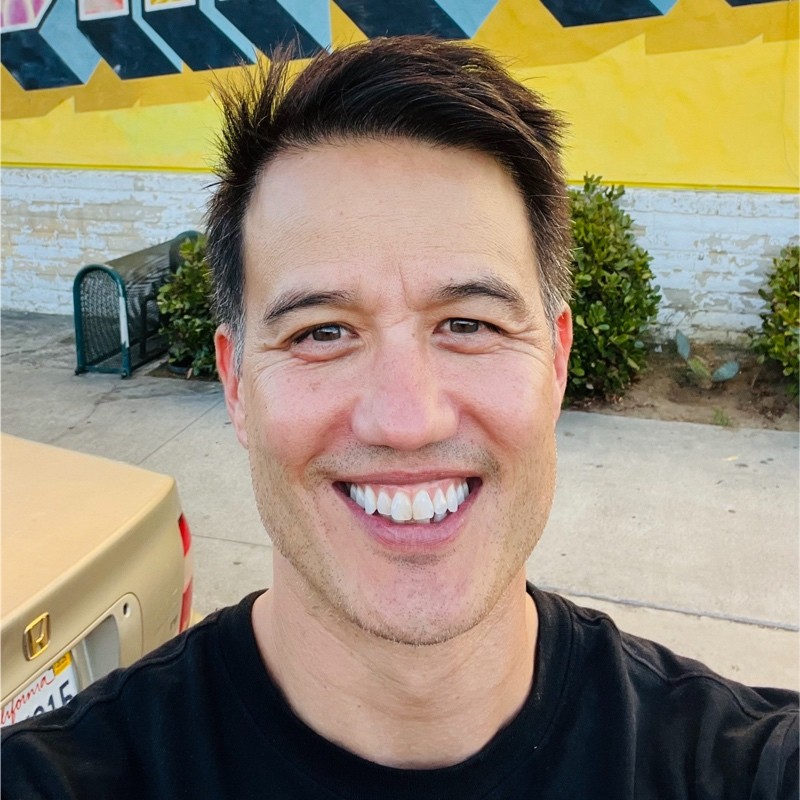
Los Cuernos Wine is a California canned wine company built on a simple premise: fresh, high-quality wine should be available anywhere, at a fair price, without the friction of bottles, openers, or full-bottle commitments. Co-founded by two Certified Sommeliers and a third-generation California winemaker, the company rebuilt the wine supply chain from the ground up, using beer distribution networks to reach the venues traditional wine distributors ignore — counter-service restaurants, golf courses, hotels, and outdoor venues — while producing with significantly lower sulfites than the bottled category standard and pricing to remove the barriers that have kept younger consumers out of wine entirely.
Wine is a six thousand year old product. So if you think about it, human beings have been drinking wine for six thousand years and then things that people don't know about it, it's naturally low carb and naturally low sugar. And so what we do is we take the six thousand year old product and we just package it different. So we do kegs and cans and we're bringing fresh wine to newer consumers. And I think the industry got really old and stale, kinda like cable TV, stuck in one place, overcharging, and and we try to bring it to new places.
If you think about an old system too, it has a lot of friction built into it. So if you wanted to have a glass of wine, you have to have a wine opener. You have have a tool, and you have to have a glass. And then you have to talk to her like, oh, do we wanna do it? Do we wanna open a whole wine? Are we gonna drink it all tonight? But if you want a beer, I'm gonna drink a beer. If I want a canned cocktail, I'm gonna do it. And so wine had friction built in, and that was part of going to the can was the footprint would be easier and the friction would be gone.
Wanna get this right. So a can seal is a ninety nine point nine nine nine nine seal. It's like very, very tight. A bottle, if it's a cork or even a manufactured cork, breathes air into it. And so some air gets in, so that wine generally has some acidity intent. It's built it's meant to age. A canned wine, we want it as fresh as possible. So we actually use much less sulfites. An average bottle of wine is thirty five parts per million. We use five because it would make it turn eggy or, sulfur colored.
Eight years ago, it was about how much headcount. Imagine you're measuring and bragging about how fast you're growing and how much headcount, and that's how companies got funding. Now companies are bragging about how little people they have in profitable, efficient growth. I think it's exciting because small teams can move and make decisions. And anyone that's tried to, like, hire people or make a decision to be a company, I think really good, intrinsically motivated people go crazy in corporate because you just can't get something done.
I think we have the potential, let's just say it sounds crazy, we're going to help regrow the wine industry. Wine is a low carb, low sugar natural product that humans enjoy, and they're drinking artificial sweeteners and chemicals all put together. We're on the right side of that. And then if we grow it big, just like any other of these brands that have won, I think we could do one hundred to three hundred million dollars exit. And if we really hit a home run, really hit a home run and become one of the wine guys, have a chance for a billion. But a lot would have to happen right.
Track your AI results