How to Build and Sell a Performance Agency for 9 Figures [Ft. Steve Weiss, MuteSix]
If you have a churn issue, you cannot go to market. I'll just say that right now. If you churn a lot of clients and you have a low net retention score, if you're at fifty percent, sixty percent net client over a year, you're probably not gonna wanna go to market. How do you see agencies and the way they operate in the market changing with AI? It's really important to nail your services side because there's no such thing as technology anymore. Technology is so commoditized. The real IP that you're building is the way you service clients. That's the only thing that matters. The main solution I want AI to solve is how do I lower the amount of key man risk in my company. Fast forward to twenty thirty. What does business look like, and how do you see AI transforming that? I think the efficiency gain four or five years from now is gonna You've got Grace and LaFrenze here today, CEO and founder of CADRE AI, and I'm super excited to be joined by my longtime friend, Steve Weiss. Steve, how are doing? Good, man. Thanks for having me. Yeah. Thanks for coming, making the long journey down to San Diego from from LA to visit us. Quick background on Steve. Steve and I have known each other since probably twenty fifteen. It's a funny story, how we originally met, which we'll share with you shortly as fierce competitors between Mute six and Power Digital. But Steve was the founder and CEO of Mute six, which was a legendary performance marketing agency and one of our biggest competitors at Power Digital from twenty thirteen to twenty twenty two. And he's now investor, adviser, connector, all the things, you know, super entrepreneur and tech enthusiast. But one of the things I admire most about you, Steve, is who you are as a family man, who you are as a leader and the loyalty and friendships that you've built with the people that you've worked with, and just your passion for learning. So excited to get a chat with you and talk AI with you today. Let's do it, man. Excited. So, Steve, first of all, how do you remember how you and I met? Oh. I remember we had a client pitch, and they said they were considering Power Digital. I don't remember exactly which client pitched, but I remember just googling your website. I'm like, who the **** are these guys? You know, I was like because usually, we'd win pitches. I mean, we were winning so many pitches, you know, thirty, forty, fifty clients a month, And I think we end up losing that pitch to PowerDigital. Don't remember why. I think it I forgot who it was, but I remember I was like, who the **** are these guys? They look like an SEO agency. Like, do they even do, like, performance marketing? And so they then they got on our radar, and then I and then I think, like, we would we don't We started seeing you guys more often, because I think you started as an SEO agency, and then you pivoted to becoming, like, a full service omnichannel agency. But, yeah, we saw you guys early, and I think we got connected. I don't remember exactly how we connected, but I was following your journey. You guys you guys had some really You guys were the most similar company to Mute six that we could find. I remember saying that to our team, where, like, they're just like us, but in San Diego, where it's, like, a lot nicer. So it's funny that you remember it that way. I think that's all true. What I remember, sitting in my office, always had a lot of respect for Mute six, mainly the culture. I think the cultures of the companies were really similar. And it was, like, the one place that, like, your people just wouldn't leave. And I remember I was sitting in my office, and I think Julie maybe came, who you know, came in my office and said, ******* Mute six is coming after our people. And I was like, what? What are you talking about? I said, hey. Have all of our recruiters. I want them to just go ham on Mute six. I want them to hit up every person at Mute six. I want them to float the most exciting high paying roles there are and make their life miserable. And so we did that for a couple days. I remember you called me. It's the first time I'd ever taught you. I obviously knew who you were, but didn't know what a strange and amazing way guy you were. And I remember you called me, and you were pissed. And what started as, like, a five minute call, like, why are you coming after our people? Turned into, like, a two hour conversation. Yeah. Oh, yeah. I remember that call. And then I think it was, like, that weekend. I'm like, hey. Do you play golf? You're like, yeah. Play golf. And I was like, come down and play with Jeff and I. And we're at Aviara. I remember it. Yeah. And you show up, and, like, dude, Steve did not play golf. Like, he put he put his I'm pretty sure he put his clubs in the back basket of the golf cart. Yeah. And I'm pretty sure you may have swang and whiffed a few times on the first call, but you didn't care. You just cruised along, we had a great time, and the rest was history. I'm a lot better at golf now. I've taken a lot of lessons. So if I could remix that experience, you'll be impressed. But, yeah, you know, I got asked to play golf. No, I didn't get asked to play golf a lot. You know, so I was like, Let's do it, man. Let's give it a go. And yeah, man, you guys are great. I've talked to a lot of agencies over the years, and I just felt like the similarities between our stories of, like, valuing team members. I didn't feel like a lot of people looked at the team as an asset, like Power did, like Mute Six did. And a lot of companies in our space would turn and burn employees. They're like, Alright, you don't want to be here, alright, you can leave. And whereas I would beg our team, Don't go. What can I do? I'll make this very difficult on you by paying you more money than anyone could ever pay you. And so, like, we retained, probably very similar to Power, retained a significant percentage of our team, and that's what contributed to a culture where everyone had each other's back. Yeah, I agree. And I think, to this day, I believe the biggest competitive advantage that you guys had, that we had, and it's the same thing now at CADRE AI, all I'm focused on is how do we build the best, most aligned team. Because if you're in a tailwind space and there's a good business model like the agencies had with reoccurring revenue, if you have and can keep the the best team, you have shared core values, you're getting better each day, you're gonna win. But stepping back there, I wanna talk to you a little bit about agencies. And I know that you know a lot of agency founders. You've had a lot of involvement. You've been one of the most successful agency founder and CEOs over the last ten, fifteen years. How do you see agencies and the way they operate and their position in the model in in the market changing with AI? I think that when when I first started Mute six, everyone was like, Steve, you need to build a technology to support the work that you're doing. And I was like, So you're saying you want me to pivot into becoming a SaaS tool? I was like, No, we're services first. And I think, like, with AI now, it's really important to nail your services side because there's no such thing as technology anymore. Technology is so commoditized. Anyone could build any technology. The real IP that you're building is the way you service clients. And so, what I think is the most important thing is building the IP around how you service your clients because that's the only thing that matters moving forward. I couldn't agree more. And I think also, you know, we're doing at CADRE, like, our big focus is AI enablement of B2B services companies. That's, like, our biggest cohort. And the challenge that there is with a lot of them where they want to or we want to deploy an AI operating system like, those businesses are ripe for it because Mute Six, Power Digital, agencies, as they scale, they tend to lose operating leverage and, at times, become less profitable because the non billable functions get way bigger. Right? Like, accounting and finance, HR, etcetera. And the middle management layer gets a lot bigger. And so the issue, though, is, like, you have to have amazing documentation of the processes to deploy any types of agentic workflows or AI operating system, and I think that most of them don't. But I guess as you look, you know, right now, let's take Mute six, Prime Mute six, call it twenty eighteen, twenty nineteen, when you enjoyed it most and think you guys were at your best. If you took that, fast forward, and plopped it to today, how does that business look different? Like, what's the AI operating system that you would install into Mute six? What are some of the problems that you had that in your agency that you would focus on AI enabling? Like, take us through what your vision of that would look like if you were there today. So just just a little bit back to, know, talking about b to b service companies and how they integrate AI. The key is to show people that AI isn't a nice to have, but it's a must have. Like And I think the way I would package it into Mute six back in the day, I would say, I go to my partners and say, Listen, guys. We have a lot of key man risk with every single person that that are that's at our company. If someone left that's really important to us Let's say, Moody. Moody is one of our your chief strategy officer, ran innovation. He was a very important member of the team. If Moody leaves, oh my god. That's gonna create a massive hole in our organization. So what I want AI to solve is I want AI and automate his workflow first. I wanna take similar to what you said, with taking the, you know, the exact, you know, kind of thought process of how Moody thinks, of how he, you know, interprets problems, how, you know Instead of trying to, you know, build an AI system around the whole company, I'm trying to build AI systems around specific people in the organization, knowing that these are the key man risks that we have. So, okay, this is how you do strategy, this is how you look at data, this is how you make decisions on who we should hire, who we should let go. Whatever Moody's doing, like, I wanna take, you know, his his mind and create an operating system around that person. And so I think that's where I would start, but I think the main solution I want AI to solve is how do I lower the amount of key man risk in my company. Makes sense. And looking back at, like, prime growth time on mute six, outside of the key man risk, which I totally agree, and that's always a problem, and we'll talk about it in a bit, especially if you want to sell your agency or business. Keyman risk is like, as a buyer, it's one of the things that we diligence most. It's like, what happens if this person leaves? But what were the other, like, major bottlenecks or friction points in your agency that you think, Man, this would be different now with AI, and we could have really created operating leverage or a growth advantage? Making decisions on data. So I think, like, we had a really good data system, we had a, you know, we had a data system with Data six, it was called, back in the day. But like, it was really difficult to interpret and understand and make decisions on the data coming in for our clients at a rapid rate, and then be able to explain to clients why we You know, why we upped this budget on this campaign, even though this campaign was ten percent above CPA goal. So, using AI to automate the decision making process or figuring out how to make AI help with the decision making process, maybe it won't automate the decision making process, but being able to use AI to help augment our team in making decisions and giving, you know, collaborative feedback to our team on how to make decisions. Totally agree. And I think as you do that, like the AI operating system for agencies I'm excited about, is that system getting smarter, actually flagging those alerts, and then getting to a point where the system can actually go make the optimizations itself. And, you know, currently, I've seen agencies that have the type of system you're talking about where it will flag that alert, create the strategic deliverable so that now a client leader can go very proactively have that conversation with the client. And I think that's always one of the hardest parts of scaling within the agency model is, like, your client services leader, if you look at a hundred of them, you know, maybe five are truly strategic. And how do you take the other ninety five and allow them to appear highly strategic through a framework. And I believe that's one of the biggest things that AI can do. And I think what you're describing in those two use cases of reducing keyman risk and then also making data more rapidly analyzed by the technology so that you can be more proactive with clients, that's gonna obviously impact client retention and expansion. Yeah. One other use case just from having our discussion. I wanna know warning signs. I wanna know, like, what is a warning sign when a client might leave? I think everyone who's listening to this podcast, you guys would all agree, it ******* sucks when clients leave. I don't think there's anyone that would debate me on that topic. If you ever run an agency, and you have a big client, and out of nowhere, you get that message that we're ending our contract, I think it's just the worst feeling in the world. And I remember feeling that feeling like I'd be on a date with someone. I remember one time I was on a I was seeing a single guy on a date, and I got a one of our largest clients sent in their notice, I was like, It just wrecked the whole date. Never talked to the girl again. Like He thinks, man, this guy's angry. Yeah, this guy's Yeah. This guy's emotionally unavailable. But, anyway, I got that notice, and I just wished I woulda knew beforehand that I should that me as CEO of this company should invest more of my time with this client. As you probably would agree, Grayson, like, when you're CEO of CADRE or Power Digital, you're trying to figure out where you could allocate your time for the highest value of the company. So if you saw If you had to understand that your biggest client at CADRE, one of your base clients at Power was not that they were leaving, but they were like, You just need to spend more. Give them more love. You'd be able to be like, Alright, I'm gonna allocate a significant amount of my resources, whether it's your team and you, to like better servicing this client. So I think where AI could really come into an impact is having warning signs. Like, if you have a bunch of different triggers or signals that could show that, hey, we're, you know, twenty percent below their CPA goal. Hey, you know, we've we've had some issues over Slack. Whatever those issues are, that would be huge as well. Yeah. I love what you're saying. So we've built that at Cadre. We have it for ourselves, and we've deployed it across a lot of different b to b services businesses and agencies where, for most agencies, for example, their knowledge base is their call recordings. It's every conversation during sales. It's the client calls, weeklies, monthlies. It's the Slacks. It's the emails. It's is the client still even showing up or who's not showing up? It's how much are we talking versus they're talking. So we've built a system that basically takes those call recordings, which I think everyone's using the call recording tools. It's kind of worthless to most people. It's like maybe it will summarize the notes. Maybe it will send a follow-up. The power that we've done is we've really funneled that into a knowledge base where now it will flag client sentiment changes. And then it will overlay that with whatever your KPIs are. And now we can see where that churn risk is. It's super accurate. And we can also see where the client's super happy. They say something nice. It pulls that out into a testimonial that we can use and use them as a reference account. But what's interesting is that that has always been a problem because before we had this, you're counting on your client services leaders to maybe go manually fill out a dashboard and say, how are they pacing towards results, and what's the sentiment of the client? And you'd have one client services leader that doesn't do it. You'd have another that has rose colored glasses and is like, hey, everything's great. They love us. And then you have another that's hypercritical. And so now within your company, you can build a quantitative and qualitative score so that you're looking at those the same and the system's getting smarter. And so especially when you look at, you know, Power Digital when it was more scaled at five hundred clients, like, you have to have that. But even right now, CADRE, we've probably got thirty, forty clients. It is critical, and it also allows us to coach up those teams. And Keith, for example, and who oversees all the client services, he listens to a podcast every morning that summarizes every client call that we had, that Kadri had the day before. So he's driving in, and he gets a good feel as to what happened. And Riley gets the same type of podcast for sales. And, I mean, it's just that's those are the simple kind of use cases that you can deploy with your call recordings that really make a difference. So I totally agree with what you're is is, like and I I love that. That that's that's deeper than what we did at Meet six. But, like, with AI, now the question is, how do you train others on how to make decisions? Alright, you have a pissed off client, or you have a client that doesn't show up, or at the very least, like, you know, let's say the CMO is showing up at every single call, and all of a sudden, they stop showing up, they start sending, you know, a very low level employee. That that that might be a trigger for, Oh my God, you know, the the CMO You're not a priority anymore to the CMO, or whatever that can mean. But, like, what do you do next? And so I think, like, you know, using AI to help understand, like, what you can do next to save the client is also very important. But I think where AI really comes in is we're trying to save revenue at all costs. If you're an agency, I think saving revenue is, like, the most important thing, just as important as, like, retaining new revenue. And, like, you don't wanna be a part of what what I used to call I always told the team, I like, I don't wanna run a CRM Ponzi scheme where, like, we have to keep signing up new clients to replace the old clients. Totally. Yeah. And I think that metric of net revenue retention, if you're gonna sell your agency, it's not just to look good to a buyer. But if you're gonna sell your agency, net revenue retention, which combines, you know, churn and service expansion, is one of the most important metrics. The best year we ever had growth wise at Power Digital, we had a hundred percent net revenue retention, like one zero two. And so we would have grown by two percent without adding a single client. And so as a result, all the new business was just stacking, compounding growth. And I think that's where AI can really help you. And, like, I saw as we scaled at Power, and I'm facing this again at CADRE, we became less effective at expanding clients because that's a strategic convo. It requires some salesmanship. It requires the right timing. Now with these call recording systems and this alarm system, we could see per pod or per client services person how much time are they actually talking to the client about new opportunities. And there's a direct correlation. The more time they're showing the client things they could do to grow faster and expand and grow their business, the more business we get. And and so I think those are all cool things. But switching gears, you know, I wanna talk about selling your business. You you had a really big success story. You sold to a strategic. Yeah. But if I'm, an agency owner and I'm listening, how big does my business need to be to sell? And how do you view private equity buyers, financial buyers, versus strategics? Oh. It's always a question everyone asks is, like, do I look for a strategic buyer? Do I look for a private equity buyer? And at what point do I start the process? I think I get that question a lot just from other agency owners. I think number one, being somewhere over three million in in EBITDA is is where I would say is like if you're a year if you're comfortably over three million in EBITDA, you have high net retention score. I I don't think you could take an agency to market now, and then obviously, Grayson, you're an expert here as well. So But I don't think if you have a churn issue, you cannot go to market. I'll just say that right now. If you churn a lot of clients and you have a low net retention score, if you're at fifty percent, sixty percent net client over a year, you're probably not gonna wanna go to market because you're not gonna get the valuation that you're gonna want. And the way I calculated valuation back in the day was in a in a very simplistic way of like, how long do you think it would take for me to grow my way into making x amount of money? So if I, you know, if I had an offer on the table for thirty, and we were doing, you know, say, five, six million EBITDA, how long would it take us to grow to making thirty million dollars for my for my management team? And versus, you know, if I'm getting a much higher, you know, multiple on my EBITDA, it'll take a lot longer. So but anyway, number one, three million in EBITDA. Number two, don't go to market with a low with with bad client churn. And number three, it's a loaded question. Think, like, if you wanna stay in the business a long time, probably going to a private equity partner is probably the best option. If you have other aspirations and, know, you you have For me, like, wanted to stay in the business. I just didn't I just happened to have Dentsuuk who reached out to us. But, you know, I think if you're probably if you want to stay in the business a little bit shorter duration, you know, the strategic buyer might be more interesting. Would you agree with that? Yeah. I totally agree with that. And, obviously, you and I have different views. We've talked about it a ton over the years where I've sold twice to private equity, the first time in twenty nineteen to Periscope Equity, and rolled a meaningful chunk of equity, took some chips off the table. And then we were the platform, and we went and acquired four different companies with them. And then we ran a process again with Sanjay and Canaccord, who I know you used as well, in twenty twenty one. And we had about thirty buyers in that process, and that's what I would recommend to any agency owner that wants to sell. Get don't make a decision yet if you wanna sell to a strategic or private equity. Get be the hot girl at the dance and have all of them there pursuing you, And the answer will become pretty obvious to you. And so for us, you know, we were considering strategics, and we were considering private equity the second time, and we ended up selling to private equity again. And that group, Court Square out in New York, has been an amazing partner to us. And I transitioned to chairman about a year after that. And Jeff Mason, who you know, took over as CEO. And now Power Digital is working towards the third bite of the apple and the third sale, which who knows? It may be a private equity firm. It may be a strategic. But if you rewind you know, you said Dentsu came to you. And after they came to you, is that when you hired investment banker and engaged with Sanjay and his team? Yeah. We we hired them. We were already engaged in talks. They reached out to us directly. By the way, big shout out to Sanjay Chata from Concord. He crushed it for us and crushed it for a lot of people. He's a he's a very awesome friend. But, yeah, Dentsu was an amazing partner for us. I mean, I think we lucked out in having someone like that who reached out to us. It's not normal for a strategic of that size to reach out to you where when when I was thinking about going to market, I I thought the same strategy as you. Was like, let's get as many offers as possible. Who cares if it's strategic or PE? Let's find the right partner who gives us the best the best offer. And it just happened to be that we believe that the offer that Dentsu gave us was extremely fair, reasonable, and we really love the people at Dentsu as well. So, like, you know, as I reflect back on the people that bought our company, they were amazing. They're still close friends today. The CEO of iProspect, Jeremy Kornfeld, still a really good friend today. Michael Oxon, also a great friend. And, you know, we went with people that we really wanted to work with. Makes sense. And did when you engaged Sanjay and his crew, investment banker, and you were obviously in talks, you know, with Dentsu, did he bring other players to the table to give you some comparison, or was it really laser focused around getting that deal done and completing that transaction? I think both of us wanted to complete that transaction. I think that he looked at the economics of our growth and what they offered us, and he's like, Steve, that's a very reasonable deal. And I and I think at the time, I wanted to go with Dentsu as well. Like, I think that they were the best player for I I think they were the the best partner. I knew the CEO, we had a great relationship with the CEO. And we we believe that we could help grow their D2C practice throughout the Density organization. And we just had a great commitment to them. I just felt like, at the time, you know, as I, like, reflect on it, that they were the best player in town. Like, they really believed in what we were trying to accomplish. Yeah. It's I agree. It's interesting. I think for an agency CEO founder, if you're selling to private equity, which I've done, you know, I think there's a lot of advantages. Some of them are, I think, literally, if you sell to the right group and you're a premium asset or you're not a turnaround, if you didn't tell your team, they maybe wouldn't even know. And you I would never do that, but, like, they do not wanna operate the business. That's their worst nightmare. Whereas when Power Digital is acquiring a company, I think we do a pretty good job on integration. Like, it's gonna your world is gonna change a lot. And what was interesting when you did the deal with Dentsu is I was like, awesome. And you guys got an amazing, multiple in number. I don't know if that's public. I would assume it is because they're a public company. Is that public information? We can Google it, dude. You Google these. It's a little north of a hundred. Was yours public? No. Ours is all private because we sold the private equity Oh, private equity. The info always gets around. Most people, if you're in the m and a space and that, you end up kinda hearing what's going on. But I was like, man, Steve Wise, legend. Love the guy. One of the things I love about you, and I think we're similar in this regard, is, like, you're an edgy guy. You speak from the heart. You know, you're not a corporate CEO in any way, shape, or form. I'm like, are you ******* kidding me? Steve's gonna go be the CEO of a company within a Japanese holding company? Like, culturally, how did that work out? Did that work out? And were you worried about that cultural match? Definitely. I'm not your traditional CEO. Like, I'm just built differently. Like, I'm very sensitive to people's needs. Look at I think people You know, I've come to the reasonable conclusion that people are number one in every in the agency. They come first before before clients, before revenue. If you have a great culture and a great team, you're gonna be successful at whatever you do. So, that was what number one was. And I and I really felt that Dentsu, during the process, really understood and connected with with, you know, the methodology that we use to really manage the team. And granted, like, we were I was really excited to work with them. I mean, obviously, I didn't get to work with them as closely as I hoped because the you know, six months after we sold, COVID hits. And everyone stops traveling, everyone's working from home, and so our earnout was propagated during a period of time in history where everyone was at home, everyone was struggling with mental health, no one knew what the future of the world was. You have this virus that everyone has to put masks on to talk to each other. So it was definitely a very difficult time because as a leader, I wanted to be there for my team, I felt like I was struggling to be their support Them, you know, as they're getting yelled at by clients, sitting at home, not being able to go out, not having freedom. It was hard for me, man. I'm just being honest. Makes sense. And you're, One of the things I love about you is you're, like, a learner. You're curious. You're the guy that will text and be like, dude, have you seen this? And then call immediately and wanna talk about it, and you just love sharing information and and learning. I know you've got a lot of different things going on right now, and you're super interested in the AI space. What are you how are you personally using AI right now, and where do you see your entry point, if any, into the AI space? Like, how do you want Steve Weiss and what you do to capitalize on this huge movement with before you answer that one, how are you using AI day to day in your business, in your personal life? What are some of the use cases? What are some of the tools in tech that have driven the most value for you? I'm learning more about coding right now. I'm building a little app called and it's a stupid app, but it's called Sacrifice. Every month, I'm trying to sacrifice one thing, whether that's sugar, whether that's, you know, my phone, spending time with kids, with my kids. I I I wanna be able to to be better about sacrificing stuff. When you get very comfortable in life, you stop sacrificing making sacrifices to become a better person. So, how I'm using AI now is I'm using AI I'm using both Lovable and ClaudeCode to be to co to code up my my little app and using Figma as well. And so that's where I've been just playing with. Obviously, use Opus four point seven to do, you know, to do all my deep research and stuff when you know, it's great for traveling, it's great for, you know, pretty much any any type of research I'm doing on a specific business. But as far as, like, the the great use cases, I wanna be better at at coding. Like, I wanna be better at, like, getting products to market fast, and that's what I'm using it for. What's the most painful, edgy sacrifice that you've had? I just started, to be honest, but, like, I was a couple months ago, like, I have a friend of mine who has done a lot of incredible stuff in his life, you know, jumping out of planes and doing all crazy ****. And I was just thinking, I'm like, you know, to get to where I wanna get to, like, my number one thing is food. I love food and I guess it's very difficult for me to keep my weight where where I want it to be because I love eating food and I have the financial means to buy the best food from Eroan and just eat, you know. And so, like, my number one sacrifice I just started doing was intermittent fasting, which was which has had a really positive impact. I wanna do a three day fast at some point. Dude, I wanna be around you when you do that. You're gonna be so angry. So angry, yeah. It's gonna be hard, but like, those sacrifices are what makes us a stronger person. You look you look back at like the sacrifices you made as an entrepreneur, you know, whether that was working till four in the morning, not sleeping, and sadly, what hurts us the most makes us stronger, and So that that's kinda what I've been using AI for. Obviously, there's, You know, I've been looking at AI and helping me evaluate investments. I've been asking AI questions about the market. Yeah. How do you use it to evaluate investments? Like, what's your workflow there? I usually will upload the deck into Opus, and it's have a prompt system around, like, what are my blind spots in this investment? What should I be What questions should I go back to them and ask? How do you know, what's the reasonable time to get my money out? Like, what are the questions I should be asking? Because a lot of time when you see, like, investor decks and stuff, don't really know what questions to ask about the specific industry. Like, what and no one's really gonna tell you the honest truth about what the risks are of that you have what you what your blind spots are. So I'll use Claude to, like, help me, like, really understand my blind spots and what what questions I should be answering and what the real risks of the investment are. Yeah. There's a cool really cool platform that I've recently learned about. I'm gonna do it. I haven't done it yet, but a bunch of my friends via YPO and EO are doing it right now, and it's called the Zenith Mind OS. Have you heard of it? No. What is it? And it's basically a system. Just people should check it out and Google it. Zenith Mind OS that you can snap into Claude or OpenAI or Treachupti, and it will interview you and ask you all these questions about your life. Like, my friends have said, dude, this thing goes deep. Like, you need to be prepared and in the headspace because it's gonna open some stuff up. But it essentially creates, like, a accuracy clone against you. Like, some of these guys have it at, ninety percent. Wow. That's supposed to run it on a dedicated, you know, computer. And then, you know, what you were talking about, those workflows, you could say, like, what are my biases and why? And it will tell you. But, like, ultimately, what they're doing with it is they're connecting it to their email, to everything, and it's, like, the first step of creating a clone to to Steve so that you can, like, know yourself better, know your blind spots better, you know, kinda like Johari window type of exercise. But also, ultimately, you can have this system work how you work. And I guess, like, those types of things, like, how far off do you think we are from you being able to have an army of Steve's that can literally work on your device and you can orchestrate and, you know, work better, faster than you. Like, how far do you think we are and how far along do you think AI really is right now? I still think that there's a lot of a lot of updates to AI around reasoning, around video, around a couple other areas. I don't think we're there yet. As far as like this idea of AGI, but as far as like duplicating yourself and your biases, I think we're with agents, I think we're incredibly close to that. I I don't think we're far at all. Now, not, I'll be clear to the audience, I'm not an AI expert. Obviously, Grayson runs an AI company, so he's probably more deeper in the weeds than me. Just toy with these tools and and play with them. But, you know, look at, like, the UI of all these SaaS companies, the UI UIs are gonna go away, in my opinion. I don't think we're gonna have any user interfaces to anything. It's all gonna be run through APIs, through agents. Agents are gonna do a lot of buying for us whether it's, you know, buying us a trip, whether it's buying, you know, sneakers, like, we're gonna be buying through agents and there's gonna be a lot of be advantages at some point to be buying through agents. So everyone's like, No, I wanna do the buying myself. Well, you're gonna pay You're probably gonna pay twenty or thirty percent more if you wanna do that. So, as far as, like, duplicating me, I think I think we're really close. I haven't put a lot of thought into You know, there's specific problems I'm trying to solve in my life right now. Like, I'll just be very candid. Like, I'm trying to find a new business to operate that that gets me, you know, excited every day. Think, you know, when you have success, finding the new thing that gets you, you know, excited every single day isn't Sure, you could attest to that. It's trial and error. You know, you try a lot of things, and I feel like I've underachieved post exit. You know, I know that's a weird thing to say, but I feel like I've underachieved. So what I'm trying to really figure out is what's gonna get me excited, what's gonna what's gonna inspire me, and what what's gonna bring the purpose that I'm that I'm looking for in life in there. Yeah. And for the listeners, like, I've tried to recruit Steve to join us at CADRE, like, ten times because I know what will get him excited. It's working with a badass group of people in a space that's that's got a ton of tailwind, and, you know, the team that we have at CADRE, and you've met some of them, is special. The problem is this guy, he's just outrageous in his requests and what he wants. So never negotiate with Steve. But I'm hoping he gets to you know, at some point, he realizes like, dude, forget forget these certain things. Like, let's go have fun and do it because I'd love to have I'd love to be your teammate. Two more questions for you. So one is, you know, I'm always a skeptic. And, like, honestly, I'm not the biggest PowerAI user. Our team is crazy. Where I've really focused is, like, what are the use cases? Like, what are how do I become great at spotting business problems that AI can really solve and really move the needle from perspective. But when I read a lot of the headlines, like, you're talking to CEOs all the time. That's your community. You know, me too. And the people that I talk to on a daily basis and just say, hey. What's your strategy? Like, very rarely do people say, like, we have a really clear AI strategy in our business. It's well understood. We're on the journey. We're measuring it. And then I'll ask people, is AI showing up in your p and l? Like, are you seeing measurable p and l impact in the form of faster revenue growth or margin expansion from AI? Rarely is the answer yes. But then I read these headlines. You would think AI is changing the world within businesses right now if you just read the news. You would think, oh my gosh. All these people are losing their jobs. Companies, you know, some are hurting, but many, like, they're more profitable. They're growing faster than ever. And, like, what I'll tell you from my seat is I think it's a bunch of ********. The technology is there, and you and I come from marketing backgrounds. A lot of these case studies you read online are PR people putting a spin on it. But why do you think, from your view, that this incredible technology has not financially impacted more businesses? I'll go right into it. I think that two things. One, people are scared of it. They're scared of the impact it'll have on their organization, their culture. You know, they're they're at the point now where they're fighting it versus embracing it. So I think there's a lot of companies that are that are fighting, you know, what's what will the impacts be from AI. And then number two, I think the sales process for a lot of companies that are selling AI, they're making it out to be a nice to have versus like a must have. And I think if you could figure out direct correlations on P and L, people are and and no brainer, this is a no brainer for you. Like, remember selling MuteSick Facebook ads to MuteSick. So was like, selling water to someone starving in the desert, you know. Do you want water? Do you wanna be hydrated? And they're like, Yeah. Yeah. I want. And so like, Facebook ads was the easiest sell. When you weren't doing anything on Facebook and you wanna grow your sales, hey, hire the best people at doing Facebook ads. So, at some point, we're gonna get there where AI becomes a nest a must have versus a nice to have. And that'll come from seeing their competitors blow by them. And what this means is that, let's say that you're running AI creative and, you know, you can now spend a significant amount more money to acquire a customer because you don't have a full creative team and a campaign team anymore. Now, it's just AI's you have an AI model that does creative for you, as an example. And now, because you're able to spend more money on customer acquisition, your competitor who's not running any AI models, who's just sitting there, you know, doing the exact same playbook they've done for the last ten years, they can only spend x amount of money to be profitable. So now their market share is dying. And I think at that point, when someone's seeing their competitor eat their lunch because of AI, then then it'll start changing really quickly. But the reality is, is not enough not enough companies are seeing efficiency gains to really scare away their other competitors. And so I think when that happens, we'll see a change. Yeah, I agree. And what I've seen, like, firsthand, and it's what excites me so much, not to plug CADRE, but, like, why we are so needed, is there's three really big reasons why I think companies have struggled to implement AI in ways that really drive clear P and L impact. And the first one is that you find a business problem, and that's step one. Like, okay, what's a business problem that, man, if we improve this by twenty percent, it would drive meaningful impact? But there's, like, twenty ways to solve that with AI. Everything from, like, there may be a tool or system or SaaS application that kinda, like, does that, but maybe it's too rigid, to a really simple, you know, clawed workflow or whatever that is, and then everything in between. And so it's hard to be like, for our business, which way of solving this makes the most sense based on where we're at? The second is the change management is the hardest. You said it like people are scared. Very rarely does, like, AI snap into your existing process. So even if you're like you're like, hey. We have a great set of use cases. Our data is clean. Our process is documented. Like, let's do this. To actually get the users to use the system is very difficult. And then the third is it's very similar to performance marketing where, like, part of the value prop of a Power Digital back in the day or a Mute six was, client, like, these are you need this whole funnel to work together. Like, you need your performance creative, your media buying, your organic search, your CRO, your email, they need to work in unison. And especially back in the day, those were highly specialized skill sets where that could be like a seven person team. And with AI, it's that way. Like, one of our biggest challenges at CADRE has been how do we put a team together where once we have a client and now we're past kind of strategy phase and we're integrating, we need a pod leader that's super business savvy, has major executive presence, can manage our team, can manage workflows. Like, that's a hard person to find. Then you and they need to know a lot about AI. Then you need several forward deployed engineers, AI engineers. Those are really expensive unicorn people. Then you need more of the back end engineers. Then you need the data person. Then you need project management. And it's like, that's an expensive, difficult team to build, and it's also a hard team to recruit and find because a lot of the talent's very similar to, you know, early days of Internet marketing. Like, a lot of the most talented people with AI, they're young. They're just graduating college. They're they're native. And, like, those people lack some of the business skills and communication skills, and they're not easy for people to manage. So I think it'll be interesting to see how companies mature with this, but I think it really creates this big need for a a group like us at Cadre that's like, let's help you get crystal clear on the strategy, and we can see this across a bunch of different Let's help you integrate where we can scale up a team for you or scale down the team, and let's bring those connections to the technology players. So No. That's I I spot on. Mean, the pod structure is everything because you wanna have the pod learning from each other. And then once the pod is really talented at learning from each other and then you can start building your own, like, internal learnings, your your LMS system. That's how we did in Mute six. We and then and you have the the pod leaders who are then contributing on a daily basis to the LMS. So now turning up a new pod goes from like, hey, this is a three, four month process of recruiting this person, this person, this person. Now there's a bigger pool of potential employees because you've done the work on building a great learning management platform. That's kind of what I realized initially was, at the time, no one knew what Facebook ads was. There wasn't a lot of people that could manage Facebook. And what I wanted to prove to people and my partner was that, Hey, listen, we could we could build a whole Facebook team without anyone having experience on the platform. And we could build that by building our own learning management system. So I think, like, if I were thinking about the model at CADRE, it's how do you take what all these guys are becoming really great at, and guys and girls who are really great at, and putting that into a learning management system, and then building out a whole learning process of what what onboarding a new employee looks like. Makes sense. And then last question for you, and I wanna ask it in two ways. Fast forward to two thousand thirty, you know, four years from now, what does the world look like? What does business look like? And how do you see AI transforming that? Yeah. I mean, it's a really good question. I think that you're dealing with a lot smaller teams. I think that's the that's the real anyone who likes to debate me on, like, the future of AI, it's like, so you're saying that we're gonna need more engineers and more and more account executives and more sellers? I don't believe I think the efficiency gain in, you know, in, you know, what is it, four or five years from now is gonna be huge. That, you know, the output of a BD person will go up three, four, five x. So if you if you told your best BD guy, you're like, listen, you don't gotta do outreach. You're gonna have the most highly vetted leads that come into you. You're gonna know every single thing about this lead before you engage them. Do you think that your closing ratio will go up? And he's he or she will say, sure. Yeah. I mean, if I had if I had an unlimited amount of prospects that, you know, I know more and I knew more about those prospects, I'd have a much higher much higher likelihood of becoming more and more efficient. So that's just one example of like, hey, listen, like, this is where efficiency gains are gonna come from. So I think smaller teams, I think less tech, and I think that companies are gonna see that like, we're not we're not gonna need it. We're gonna have real highly highly highly augmented workflows for our specific industry. There might be some normalization to their to the way they do stuff, but there's not gonna be the intellectual IP will be different for each business. And I think like, the the biggest core piece of the business moving forward will be how do you generate your own intellectual IP that's differentiated from your competitors. But I think sales, IP for your business, delivery of whatever service offering that you're gonna be doing, these are all things that are gonna evolve and change in twenty thirty. Like, I think less people, greater efficiency, and different sales products. Yeah. And I agree on the less tech. I think that that's where the big players, and I think Anthropic and Claude are leading the path is, like, one system that's your control panel for your business to where that knowledge base, your IP, is well documented and triggering off that system. So it's gonna be really interesting on the AI tech side to see who wins. There's also all types of problems there. Right? Like, tokens are gonna become a lot more expensive. Like, there's definitely a bubble with AI tech right now from an investment perspective to where the the amount of power energy costs that they're burning, it's gonna have to shift at some point. But I guess one more view on twenty thirty. You're a father. You're an amazing father, girl dad. I think your daughters are four and one. So let's say, you know, twenty thirty, they're gonna be call it eight, and five. Like, what are you scared about? And how are you gonna, like, prepare your kids to live in, like, a totally different world than than we grew up in? I think about that all the time. I think that overreliance on AI will stop people from being intellectually curious. I think I want my kids to be curious about life. I want them to to learn from experience and not go to to to chat GBT or Claude and ask questions around, you know, What is the water like today? Is it cold? No. Want you to go in the water and figure out if it's cold or not. And think, like, my fear for the future is that, you know, less intellectual curiosity, less taking risks, less human interaction, less, you know, less being a human and more being closer to, like, the AI and letting the AI dictate your decision making. So, like, I always say to my kids that, like, I want you guys to take risks, you know, obviously not crazy risks, but I I want you guys to be to be the best versions of yourself, and I I want you guys to to stop you to not be addicted to the cell phone, even though I'm dealing with that addiction myself, to not be addicted to any AI tools. And it's gonna become harder and harder. As these tools get better and better, you know, behavior of people is gonna change. We're gonna be over reliant on these tools to dictate our daily decision making. So that's what I'm really worried about, to be honest, is like, obviously, there's other things around like safety that I think that no one's really talking about. Those are the things that that keep Yeah. And I think the scammers I mean, there's a lot of Internet scammers in the space we're in. The scammers are gonna be enabled at all new levels, and so that's scary. I guess last thing, if there's if someone's listening and they're a parent and they've got a sixteen, seventeen, eighteen, twenty two year old kid that's maybe graduate about to enter the workforce, and they're like, hey. Talk to Steve. This guy's a top entrepreneur, and, you know, their kid's ambition is to be entrepreneur or CEO. What are you telling them to learn? Like, I I remember back in the day, I'd have those convos, and I would be like, learn, you know, Amazon. Like, Amazon's hot, whatever it is. But, like, what if you're coming out of college right now and you wanna be like, I'm gonna have the biggest advantage or high school, like, what are you telling them to learn and master? The loaded answer is Learn AI, go on Claude, go log Claude, Claude code, go learn JatGPT. And I'm not going there. So I'm going a totally different route. You know, I'm a guy that spent five years of my life performing comedy full time. And if I were if my kid was seventeen or eighteen, I want them to be successful in business, I'm putting them in public speaking classes. I want them to be the best communicator that they could be. And so, like, if I'm giving people advice on what to do with their kids, and obviously, I'm not perfect, but like, I put them in in interpersonal communication classes. I think that that's a huge void. If your son or daughter has a ton of confidence in communication and can communicate their thoughts and feelings in a thorough, like, focused way, they're gonna be set apart from everyone in in in the hiring world. Yeah. Love that. And I think it's for lots of reasons. You know, the obvious one is just how they differentiate themselves, how they connect with humans, how they can sell. The other is, like, a lot of being great with AI is being an amazing communicator. You know, when you look at vibe coding, like, it's communication. When you look at prompting, it's communication. So I think that's an awesome answer. Last question. Those five years you did stand up comedy, how much money did you make across those five years as a comedian? It's a good question. Over under fifty grand for the five years. Say slightly over fifty We got a pro comedian here. That's right. Well, it was great chatting with you, man. Love it. Could go on for hours, you know, chitchat and picking your brain, but you're a legend, and thanks for for the time. Thanks for having me, Grayson. Appreciate it.
How to Build and Sell a Performance Agency for 9 Figures [Ft. Steve Weiss, MuteSix]
Steve Weiss built MuteSix into one of the most competitive performance marketing agencies in the country and sold to Dentsu for a little north of $100M. In this episode, Steve joins Grayson Lafrenz, Founder and CEO of Cadre AI, to get into what agency owners consistently get wrong about AI adoption, why most companies can't point to AI actually showing up in their P&L, and where the real operating leverage will come from as teams get smaller and output expectations go up.
Steve's starting point for AI is not a company-wide rollout. It's identifying who your two or three biggest key man risks are, then building the AI system around how those specific people think, make decisions, and operate. He used his CSO Moody as the example: before trying to automate the company, you create an operating system around that one person. He also walks through the conditions that actually determine M&A readiness, why a net retention score at 50-60% makes a market process pointless, and how he thought about valuation in a way most founders skip. Then both Steve and Grayson get into why competitive pressure, not internal enthusiasm, is what will finally push businesses to treat AI as a must-have.
Topics discussed:
- Building AI systems around key individuals before any company-wide deployment
- Using behavioral signals like CMO disengagement to predict client churn early
- Why net revenue retention at 50-60% disqualifies an agency from going to market
- M&A readiness conditions: EBITDA floor, churn, and buyer type by timeline
- PE versus strategic: how your desired runway determines which path makes sense
- Avoiding the "CRM Ponzi scheme" trap where new clients just replace churned ones
- POD structure and LMS as the infrastructure that makes hiring and scaling repeatable
- Why SaaS UIs disappear and agents take over buying decisions, with a 20-30% premium for those who opt out
- Why public speaking and interpersonal communication beat coding as the highest-leverage skill to develop now
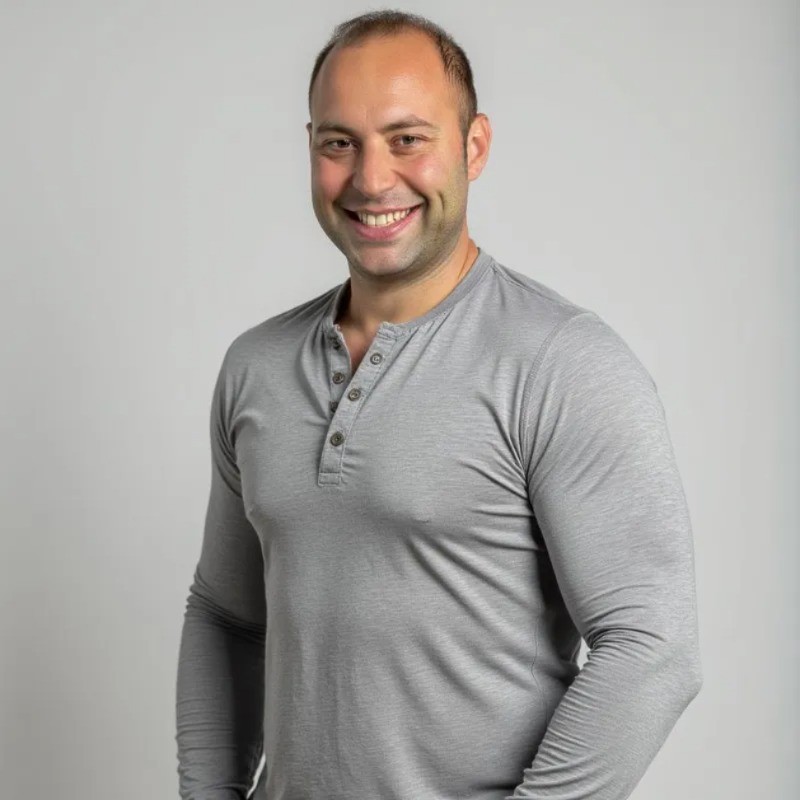
MuteSix is a performance marketing agency founded in 2013, built at the intersection of creative, media buying, and data. The agency focused on giving direct-to-consumer eCommerce brands an edge over larger enterprise competitors by combining integrated media teams with a data-driven growth model. At its peak, MuteSix ran a team of 450, generated over a billion dollars in trackable revenue for clients, and was recognized in more Facebook Success Stories than any other agency. The business grew 25% or more every year, earned two Inc. 500 placements, and was acquired by iProspect in 2019.
What are some of the problems that you had that in your agency that you would focus on AI enabling? Talking about b to b service companies and how they integrate AI. The key is to show people that AI isn't a nice to have, but it's a must have.
If someone left that's really important to us, let's say, Moody. Moody is one of our chief strategy officer, ran innovation. If Moody leaves, oh my god, that's gonna create a massive hole in our organization. So, what I want AI to solve is, I want an AI and automate his workflow first. I wanna take Similar to what you said with taking the exact kind of thought process of how Moody thinks, of how he, you know, interprets problems. Instead of trying to, you know, build an AI system around the whole company, I'm trying to build AI systems around specific people in the organization, knowing that these are the key man risks that we have. So, okay, this is how you do strategy, this is how you look at data, this is how you make decisions on who we should hire, who we should let go. Whatever Moody's doing, like, I wanna take his mind and create an operating system around that person. And so I think that's where I would start. The main solution I want AI to solve is how do I lower the amount of key man risk in my company.
How do you view private equity buyers, financial buyers, versus strategics? It's a question everyone asks is, like, do I look for a strategic buyer? Do I look for a private equity buyer? And at what point do I start the process? I think I get that question a lot just from other agency owners. If you're comfortably over three million EBITDA, you have high net retention score. I don't think you can take an agency to market now, and then obviously, Grayson, you're an expert here as well. So if you have a churn issue, you cannot go to market. I'll just say that right now. If you churn a lot of clients and you have a low net retention score, if you're at fifty percent, sixty percent net client over a year, you're probably not gonna wanna go to market because you're not gonna get the valuation that you're gonna want. And the way I calculated valuation back in the day was in a in a very simplistic way of like, how long do you think it would take for me to grow my way into making x amount of money?
Fast forward to twenty thirty. What does business look like, and how do you see AI transforming that? I think that you're dealing with a lot smaller teams. Anyone who likes to debate me on, like, the future of AI, it's like, so you're saying that we're gonna need more engineers and more account executives and more sellers? I don't believe. I think the efficiency gain in, you know, what is it, four or five years from now is gonna be huge. That, you know, the output of a BD person will go up three, four, five x. So if you told your best BD guy, you're like, Listen, you don't gotta do outreach. You're gonna have the most highly vetted leads that come into you. You're gonna know every single thing about this lead before you engage them. Do you think that your closing ratio will go up? He or she will say, sure. Yeah. Mean, if I had an unlimited amount of prospects, and I knew more about those prospects, I'd have a much higher likelihood of becoming more and more efficient. So that's just one example of like, hey, listen, like, this is where efficiency gains are gonna come from. We're gonna have real highly, highly, highly augmented workflows for our specific industry. There might be some normalization to the way they do stuff, but the intellectual IP will be different for each business. And I think like, the the biggest core piece of the business moving forward will be how do you generate your own intellectual IP that's differentiated from your competitors. But I think sales, IP for your business, delivery of whatever service offering that you're gonna be doing, these are all things that are gonna evolve and change in twenty thirty.
Track your AI results